For months, Shalini Thakur had been telling people that something was wrong.
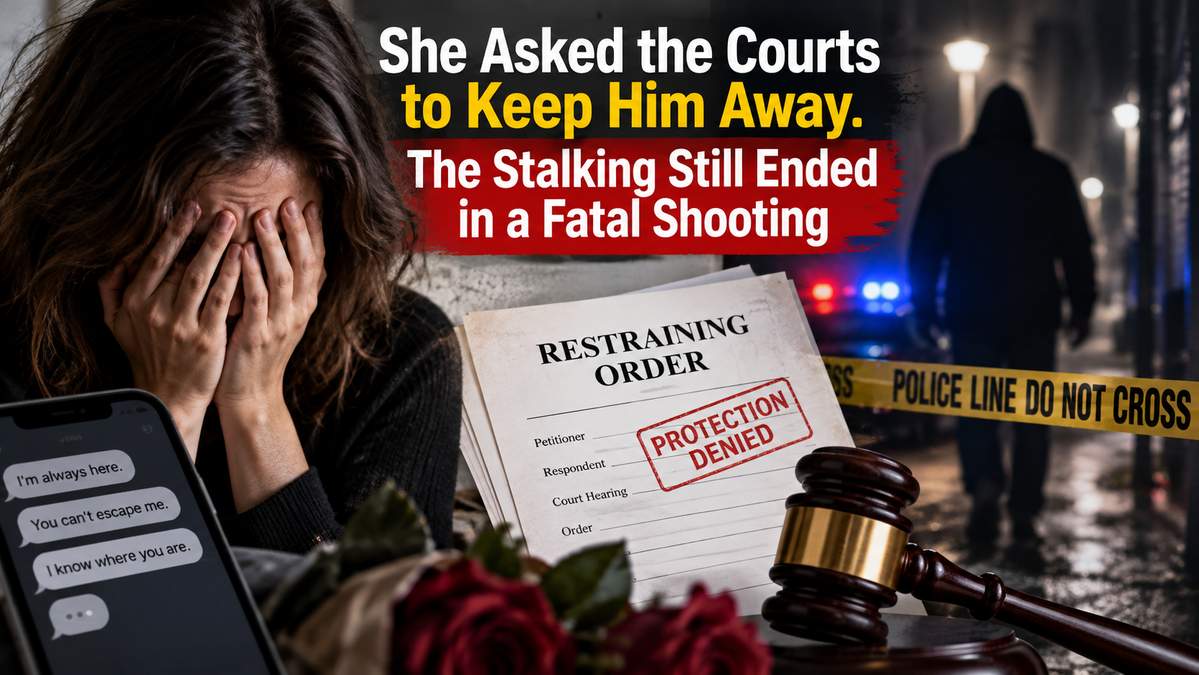
The 38-year-old Indian-origin woman living in Sacramento, California, had reportedly faced a series of frightening incidents involving a man she knew. A tracking device was discovered under her car. There were allegations of harassment and an intrusion into her home. Eventually, she sought legal protection and obtained a restraining order.
Yet on September 8, 2026, the fears she had repeatedly raised became reality.
Thakur was fatally shot outside a Sacramento-area restaurant, authorities said. The man accused of stalking her, 22-year-old Rohit Rohit, later died from what authorities described as a self-inflicted gunshot wound following a police pursuit and standoff.
Her death has now raised a difficult question that goes beyond one criminal case: What happens when a victim recognizes the danger, reports it and seeks protection, but the threats continue anyway?
The Warning Signs Started Long Before the Shooting
According to reports, Thakur’s ordeal developed over months rather than beginning with the fatal attack.
Her family and authorities have described a pattern of alleged stalking and harassment. One of the most disturbing discoveries came when an Apple AirTag was reportedly found hidden under her vehicle.
An AirTag is designed to help people locate belongings such as keys, bags or luggage. In this case, investigators and media reports say the technology was allegedly used to monitor Thakur’s movements without her consent.
The discovery appears to have been one of several warning signs that Thakur was becoming increasingly concerned about her safety.
From Tracking to an Alleged Home Intrusion
The reported incidents did not stop with surveillance.
According to accounts cited by multiple news organizations, Thakur also reported that someone had entered her home while she was asleep. Investigators have further examined allegations that a duplicate or copied key may have been used to gain access.
For someone already worried about being followed, discovering that a person may have been able to enter her home would have represented a significant escalation.
The case therefore was not simply about unwanted messages or repeated encounters.
The allegations described a progression from monitoring to harassment and, eventually, an alleged intrusion into the place where Thakur should have felt safest.
She Went to Authorities for Protection
Reports indicate that Thakur had contacted authorities about her concerns before the shooting.
By May 2026, she had obtained a restraining order against Rohit, according to reporting based on authorities and court-related information. The order was intended to establish a legal barrier between the two.
But a restraining order is not a physical shield.
Its effectiveness depends on enforcement when the person subject to the order allegedly violates it.
Reports say Rohit continued to stalk or contact Thakur despite the order. The circumstances surrounding those alleged violations are now part of the broader scrutiny following her death.
The Final Attack Happened in Broad Daylight
On September 8, the situation reached its fatal conclusion.
Authorities said Thakur was attacked outside a Panera Bread restaurant in Sacramento’s Arden-Arcade area. Surveillance footage reportedly showed Rohit approaching and chasing her before shooting her.
The attack was not confined to a private location.
It happened in a public setting, where other people were present.
After the shooting, Rohit fled by vehicle. Police eventually located him on Highway 50, where a standoff followed. Authorities later found him with a gunshot wound that they believe was self-inflicted. He died from his injuries.
A Mother Left Asking Why the Warnings Were Not Enough
For Thakur’s family, the tragedy has been accompanied by another source of pain: the belief that her fears had been clearly communicated before her death.
Her mother, Sudesh Kumari, has spoken publicly about her daughter’s fear and the repeated problems involving Rohit. She told KCRA 3 that her daughter was frightened of him and had rejected his reported desire to marry her.
Family members have questioned whether more could have been done after Thakur reported the alleged stalking and obtained court protection.
Those questions are now part of the public discussion surrounding the case. They should not, however, be confused with a completed official finding that any particular agency or individual legally caused the death.
The investigation remains important precisely because it must establish what authorities knew, what actions were taken and what happened after the restraining order was issued.
When Technology Becomes Part of Stalking
The AirTag detail has added another dimension to the case.
Small tracking devices have legitimate everyday uses. They can help people locate lost possessions or keep track of personal belongings.
But the same technology can become dangerous when used to monitor another person’s movements without their knowledge or consent.
Thakur’s case has therefore drawn attention not only to traditional forms of stalking but also to how consumer technology can potentially become part of harassment.
The technology itself is only a tool. The larger issue is how someone uses it—and whether victims have effective ways to respond when they discover they are being tracked.
A Restraining Order Can Signal Danger, Not the End of It
There is an important distinction in this case.
Obtaining a restraining order does not necessarily mean a threat has disappeared. In fact, the need for such an order can itself indicate that a victim has already experienced conduct serious enough to seek legal intervention.
Thakur’s reported experience illustrates why protection orders can become only one part of a wider safety response.
When alleged stalking continues after legal intervention, the situation can become particularly difficult.
That is why the details surrounding the reported violations of Thakur’s order will matter as investigators reconstruct the months before her death.
The Case Is Also Raising Questions About Immigration
The suspect’s immigration status has become part of the political discussion surrounding the killing.
Several reports have said Rohit was an Indian national who was in the United States without lawful immigration status. The U.S. Department of Homeland Security has also been cited in reporting about his immigration status.
That fact has prompted commentary about immigration enforcement.
However, it is important not to allow that debate to obscure the central facts of the criminal investigation. The immediate issue documented in the case is the alleged stalking, the restraining order, the fatal shooting and the subsequent death of the suspect.
Broader immigration-policy conclusions require separate evidence and should not be assumed simply because the suspect’s immigration status has been reported.
A Pattern That Became Visible Too Late
Perhaps the most unsettling aspect of the case is the number of alleged warning signs.
A tracking device.
Reported harassment.
An alleged home intrusion.
A request for legal protection.
A restraining order.
Alleged violations of that order.
And finally, a fatal shooting.
Viewed individually, each incident might appear to be another piece of a complicated investigation. Together, they form the timeline that authorities and Thakur’s family are now trying to understand.
That timeline is why the case has attracted such attention.
What Her Story Says About Stalking
Stalking is sometimes misunderstood as nothing more than persistent unwanted attention.
But cases like Thakur’s show how alleged stalking can involve surveillance, intimidation, unwanted contact, property interference and attempts to gain physical access to a victim.
The danger can increase when a person refuses to accept boundaries.
Thakur’s reported efforts to create distance through the legal system demonstrate that she recognized the seriousness of the situation.
The tragedy is that the protection she sought did not prevent the final attack.
A Case That Leaves Difficult Questions Behind
Shalini Thakur’s death is now being investigated as a killing preceded by months of alleged stalking.
Authorities have identified Rohit Rohit as the person responsible for the shooting, while he died before he could face prosecution.
That leaves many questions for investigators, courts and the community.
How were earlier reports handled?
When were the alleged violations of the restraining order documented?
What additional measures were available?
And could earlier intervention have changed what happened?
Those questions deserve careful examination based on evidence rather than speculation.
For Thakur’s family, however, the outcome is already irreversible.
She had reportedly recognized the danger. She had sought help. She had asked the legal system to keep the man away from her.
On September 8, she was killed by the same man she had feared.
The case is a stark reminder that when stalking escalates, warning signs should never be treated as ordinary relationship conflict. A threat may begin quietly, but its consequences can become devastatingly real.